FEATURED WORK
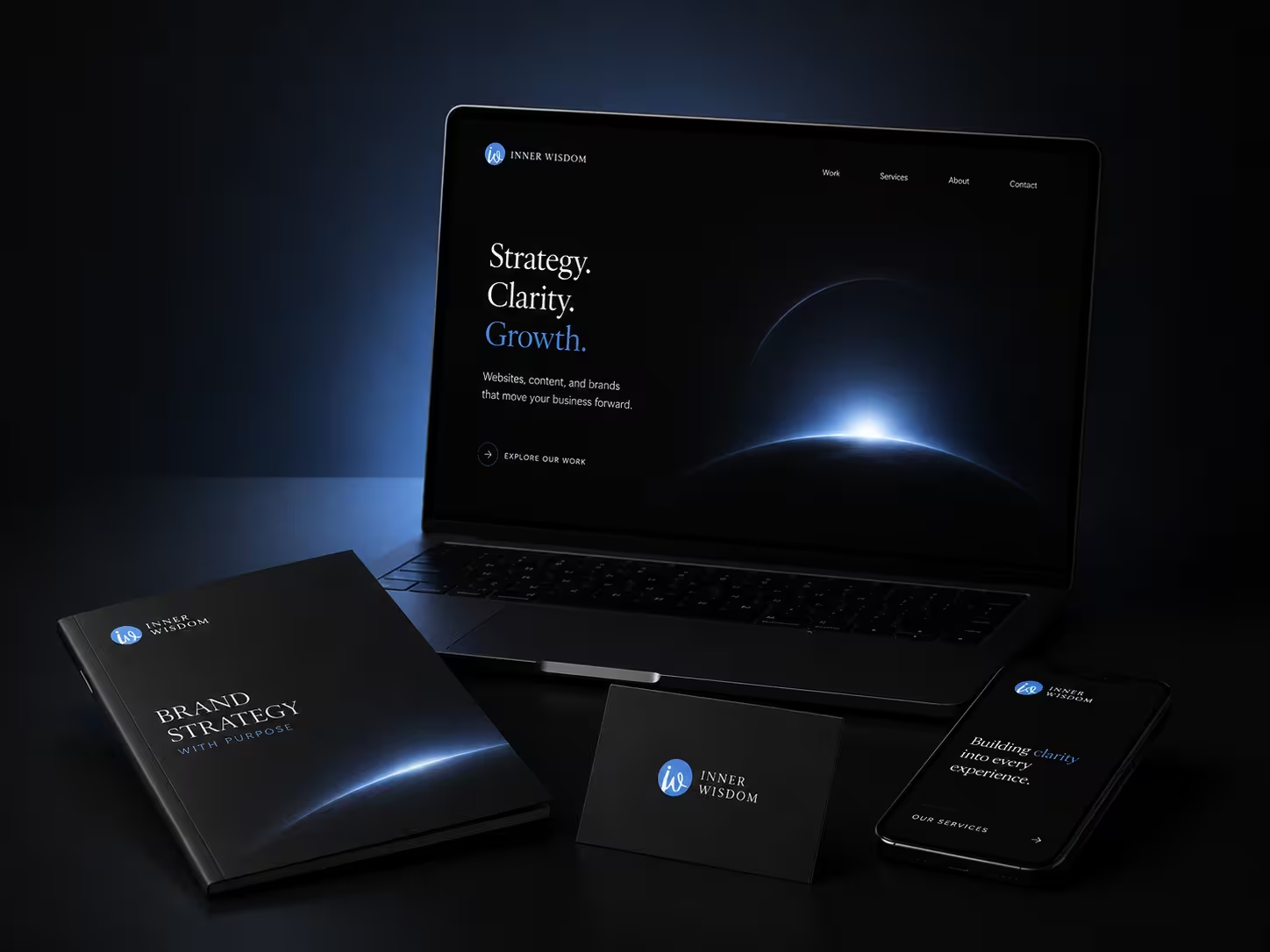
A premium digital presence designed to bring strategy, clarity, and growth into one refined experience.

Your Business Has Outgrown Its Brand. Now What?
8 Minutes Read
August 9, 2026
There is a point in the life of a business when the brand starts to feel smaller than the company behind it. The work has improved. The clients are more sophisticated. The team is sharper. The offer may have moved upmarket or expanded into new territory. Yet the outside world is still meeting an earlier version of the business.
That mismatch is easy to misread. The first instinct is often visual: the logo feels dated, the website looks old, the colours no longer feel premium. But a visual problem is not always a design problem. Sometimes it is a positioning problem wearing a design costume.
Before deciding to refresh, reposition, or rebrand, the useful question is not, “Do we still like this identity?” It is, “Does this brand still tell the truth about the business we are becoming?”
A brand can be outdated without being bad
Brands accumulate meaning. Recognition, familiarity, trust, search demand, referrals, remembered phrases, colours, symbols, and even small quirks can become assets over time. Throwing them away because a competitor launched something cleaner is not strategy. It is aesthetic anxiety.
Research on rebranding has repeatedly shown why this deserves care. Established brands can lose customer-based brand equity when changes break too abruptly with what people already know. At the same time, visual rejuvenation can improve perceptions such as modernity when it preserves enough continuity to remain recognizable. The practical lesson is simple: change should be proportionate to the business problem.
A brand should evolve because the company, market, audience, or ambition has changed in a meaningful way. Not because everyone is tired of looking at the same deck.
Start with the gap, not the logo
When we diagnose whether a business needs a refresh or something deeper, four layers matter. They are connected, but they are not the same.
1. Business
What is actually different about the company today? Perhaps a founder-led consultancy has become a multi-disciplinary firm. A local operator has moved into national accounts. A product company has added a service layer. A business that once competed on speed now competes on expertise.
If the commercial model has changed but the brand still communicates the old model, the problem starts upstream of design.
2. Market
Who are you being compared with now? A company can outgrow its brand simply because the competitive set changes. The identity that worked when you were compared with smaller regional players can suddenly feel underpowered when prospects place you beside category leaders.
This does not mean copying the category. It means understanding the codes buyers use to judge competence, relevance, and fit, then deciding which codes to meet and which ones to challenge.
3. Message
Can a smart prospect understand, in a few seconds, who you are for, what you solve, and why your approach is different? Many “branding problems” are really language problems. The visual system may be perfectly usable, but the business has accumulated so many services, audiences, and claims that nobody can find the centre.
4. Expression
This is the visible layer: identity, typography, colour, image direction, motion, website, sales materials, social content, and the small details that create a coherent impression. Expression matters enormously, but it should carry the strategy rather than invent it.
A composite case: the company that looked cheaper than it was
Consider a pattern we see often. A specialist advisory firm grows through referrals. Its fees rise, the work becomes more complex, and the team begins winning larger engagements. Operationally, the business has moved forward. Perceptually, it has not.
The website still talks like a small generalist. The visual identity relies on stock photography and safe corporate colours. Service pages list capabilities but do not explain the firm's point of view. Prospects who arrive through a trusted referral convert, because someone else has already supplied the missing confidence. Cold prospects hesitate because the brand asks them to infer too much.
The obvious recommendation might be a full rebrand. But after diagnosis, the deeper issue may be positioning and message. The existing name has equity. The mark is recognizable. Clients already use a familiar shorthand for the firm. Destroying those assets would solve the wrong problem.
A stronger move is often a repositioning supported by a focused visual refresh: sharpen the category, clarify the value proposition, define a more confident verbal system, improve the design language, rebuild the website around buyer decisions, and preserve the elements that still carry recognition.
That is a very different project from “new logo, new colours, launch post.”
Refresh, reposition, or rebrand?
Choose a refresh when the strategy still works
A refresh makes sense when the business is fundamentally the same, the audience is still right, and the existing brand has useful recognition, but the expression has fallen behind. The work is primarily about making the brand more current, coherent, flexible, and distinctive.
Typical signals include inconsistent applications, an identity that does not work well digitally, dated typography, weak image direction, or a website that visually undersells the company.
Choose repositioning when perception is the bottleneck
Repositioning is appropriate when the brand needs to mean something different in the market. You may be moving upmarket, narrowing around a more valuable niche, expanding into a new buying audience, or changing the way you want to be compared.
The name and identity may survive. The message often changes substantially. The website almost certainly needs to change because positioning has to be translated into pages, proof, hierarchy, and buyer journeys.
Choose a full rebrand when the old system cannot carry the new business
A full rebrand is justified when the business has changed so much that preserving the old identity creates more confusion than value. Mergers, major strategic pivots, reputation problems, expansion into a fundamentally different market, or a name that limits future growth can all create that condition.
Full rebrands are expensive because they affect more than design. They touch URLs, signage, sales tools, templates, social accounts, legal documents, product interfaces, email, internal language, and years of accumulated recognition. The decision should be commercial, not cosmetic.
What not to throw away
One of the most mature things a brand team can do is decide what deserves to survive.
Recognition is not the enemy of progress. A familiar colour may have more value than the team realizes. A phrase customers repeat back to you may be more strategically useful than a clever new tagline. A visual quirk that feels imperfect internally may be exactly what makes the brand recognizable externally.
Before changing anything, inventory what already has equity. Talk to customers. Listen to sales calls. Review branded search terms. Notice what people mention without being prompted. Good rebranding is partly an act of subtraction, but it is also an act of preservation.
A practical decision test
Before commissioning design, answer these questions in plain language:
- Has the business model changed?
- Has the audience changed?
- Has the competitive set changed?
- Has the value proposition changed?
- Does the existing name still help?
- Which current brand elements carry genuine recognition?
- Where exactly does the current brand create friction in sales, hiring, partnerships, or growth?
If most of the answers point to expression, refresh. If the business is right but the market is reading it incorrectly, reposition. If the current identity fundamentally misrepresents where the company is going, a rebrand may be the honest answer.
The goal is not to look new. It is to become more accurate.
A strong brand is not a decorative layer applied after strategy. It is the system that makes strategy legible to other people.
That is why the best brand transformations often feel obvious in hindsight. They do not manufacture a new personality for the sake of novelty. They bring the outside of the business closer to the reality inside it, then make that reality easier to understand, trust, and choose.
When a business has outgrown its brand, the answer is not automatically “start over.” The answer is to diagnose the distance between what the business has become and what the market still sees. Then change exactly as much as that distance requires.
More insights
View all
View all